
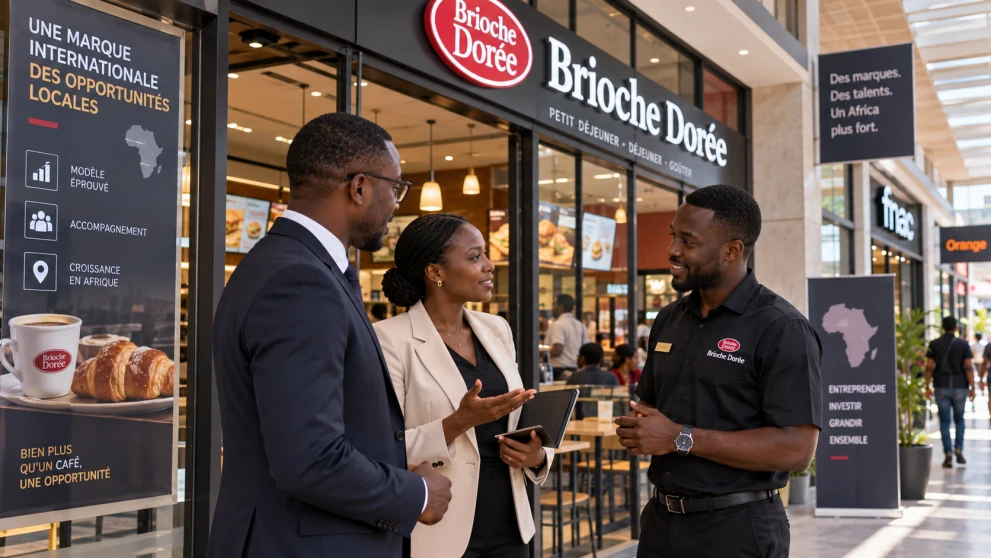
Franchising offers a route into established markets that few other investment formats can match: a proven business model, an existing brand and operating playbook, and a support structure from the franchisor. Across African economies, appetite for the format is growing as urbanisation and consumer spending expand, and investors are increasingly looking at franchise chains as a way to diversify beyond commodities and real estate.
Why franchise investment suits diversification
Franchise assets typically generate more predictable cash flow than early-stage ventures, because the operating model has already been tested elsewhere. For an investor building a diversified portfolio, that predictability is valuable alongside higher-risk, higher-upside positions in sectors like energy or precious metals.
What to evaluate before committing capital
Not every franchise opportunity translates well across borders. Local consumer preferences, supply chain access, labour costs and regulatory requirements all need to be checked against the franchisor's existing model, rather than assumed to transfer automatically. Site selection and local operating partnerships matter as much as the strength of the brand itself.
Ongoing support, not a one-off transaction
Franchise investment is rarely a single transaction; it is an ongoing relationship between investor, franchisor and local operations. Knowis Group Investments provides ongoing advisory support to clients pursuing franchise chain investments, covering the same due diligence and structuring discipline applied across our other advisory mandates, from initial evaluation through to operating support once a franchise is up and running.
For investors weighing where a franchise position fits in a broader African portfolio, the practical question is not simply whether the brand performs well elsewhere, but whether the local market conditions, supply chain and operating partner are in place to let it perform here too.
The operating partner is often the deciding factor
A strong brand with a weak local operating partner underperforms just as often as a mediocre brand with an excellent one. Franchise agreements typically place day-to-day execution in the hands of a local operator, which means due diligence on that operator, their track record, their access to suitable sites, and their ability to manage staff and supply chains locally, deserves as much scrutiny as the franchise brand itself.
Portfolio fit over brand recognition
It is tempting to select a franchise investment based on brand recognition alone, but the more useful question for portfolio construction is how the cash flow profile of a franchise position complements what an investor already holds. A franchise generating steady, contracted income sits differently in a portfolio already weighted toward volatile commodity or equity positions than one added to a portfolio of similarly stable assets. Getting that balance right is as much a portfolio question as it is a franchise question.
Growing appetite, still an early market
Franchise investment across African markets is expanding, but it remains a comparatively young asset class in the region, which means investors benefit from advisory support that has evaluated the due diligence, structuring and operating questions above across more than one franchise category, rather than treating each opportunity as an isolated decision, and from a partner willing to say plainly when a particular franchise concept is not yet ready for a given market.