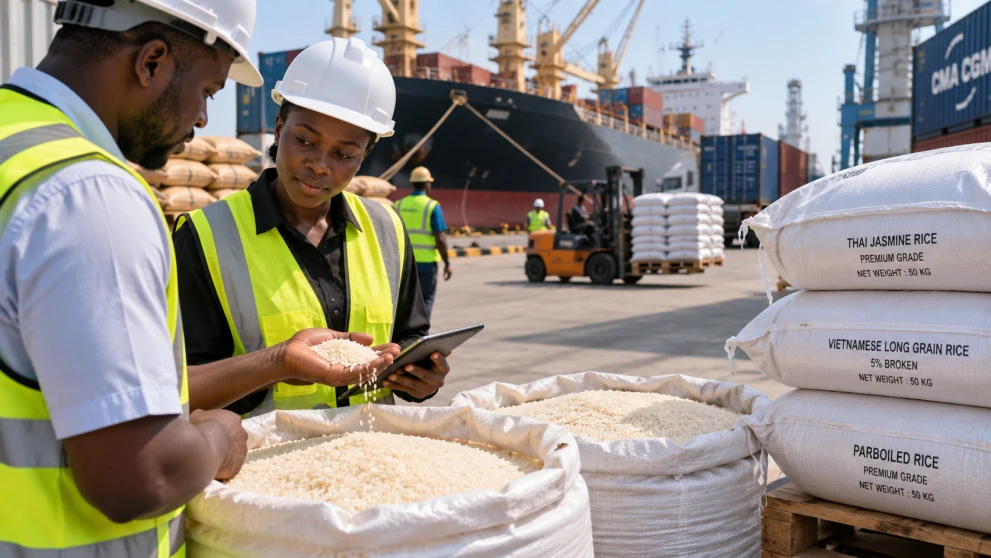
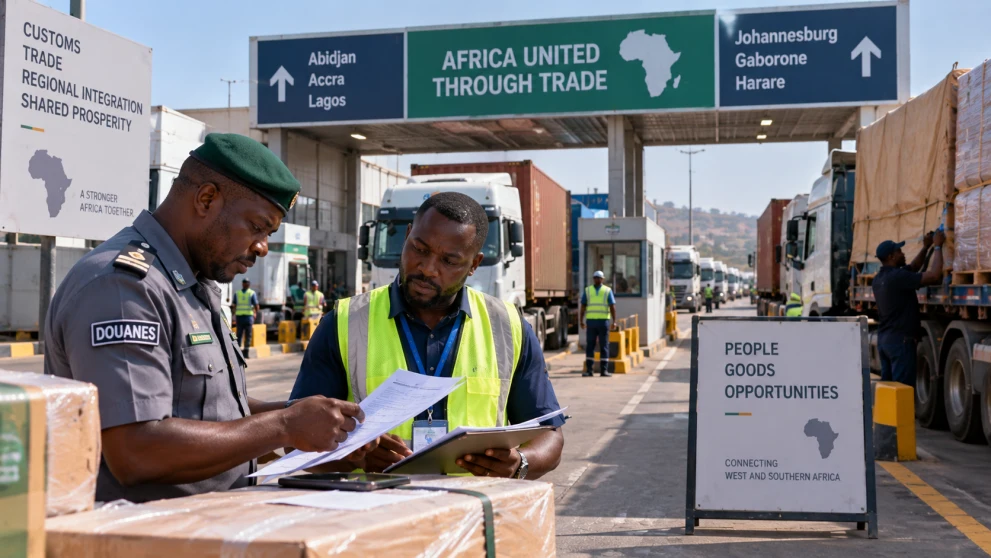
Trade between Southern and West Africa is growing steadily, driven by demand for commodities, equipment and consumer goods that are not always available locally. Businesses that treat this as a simple extension of domestic trade, however, are often caught out by differences in customs procedure, currency exposure and logistics infrastructure between the two regions.
Customs procedures are not uniform
Documentation requirements, tariff classifications and clearance timelines vary meaningfully from one corridor to the next. A shipment that clears smoothly through one border post can be delayed for days at another simply because the paperwork was prepared for the wrong jurisdiction's expectations. Planning for this variation, rather than assuming a single process applies everywhere, saves considerable time.
Currency exposure needs a plan, not an afterthought
Transactions spanning multiple currencies carry exchange rate risk that can erode margins if it is not addressed at the contract stage. Businesses that agree pricing and settlement terms upfront, with currency risk explicitly allocated, are in a materially stronger position than those who leave it to be resolved at payment time.
Logistics coordination across corridors
Moving goods across Southern and West Africa typically means coordinating multiple transport modes and, often, multiple intermediaries. The businesses that manage this well are the ones that treat logistics coordination as a dedicated function, not something bolted onto a sales process after a deal is agreed.
Why this matters for our own expansion
Knowis Group Investments has built its trade execution, customs coordination and multimodal logistics experience largely from a Southern African base. As we look toward opportunities further west, including in French-speaking West Africa, this is precisely the operational discipline, on customs, currency and logistics alike, that we are extending into new corridors, rather than assuming regional trade works the same way everywhere.
Language and documentation add another layer
Trade between an English-speaking Southern African base and French-speaking West African markets introduces a documentation challenge that is easy to underestimate: contracts, customs declarations and correspondence often need to work in both languages, and inconsistencies between versions can cause delays at the exact points, customs and banking, where delays are most costly. Businesses that standardise bilingual documentation early avoid a recurring source of friction later.
Building the corridor relationship before the first shipment
The businesses that move fastest once they start trading across a new corridor are usually the ones that invested time in relationships, with customs agents, logistics partners and local counterparts, before the first shipment ever moved. That groundwork rarely shows up in a cost estimate, but it consistently determines whether a first shipment across a new corridor arrives on schedule or gets caught by a process nobody had mapped out in advance.
Treat the corridor as a market of its own
Businesses that succeed across Southern and West Africa tend to treat each corridor as a distinct market with its own rules, rather than a single "regional trade" strategy applied everywhere. That mindset, more than any single procedural fix, is what keeps customs, currency and logistics risks from compounding into the delays that catch newcomers off guard.